
OPEN-SCIENTIST: a paradigm shifting
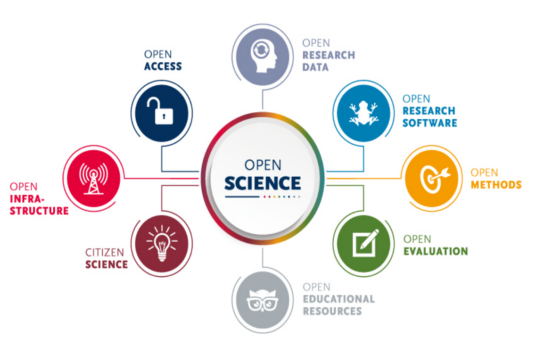
This workshop presented concrete avenues for improving open science practices in public health and epidemiology. P Bernard argued that an “open scientist” can adopt open infrastructures, such as Zettlr for writing and OpenAlex as a key database.
He also highlighted the benefits of sharing open research materials, including preregistration of study protocols, the use of registered reports, and easier access to open questionnaires or intervention content (e.g., validated messages). These practices contribute to greater transparency and accessibility in research.
The workshop emphasized open data sharing as a major opportunity to conduct original research projects—such as individual participant data meta-analyses—and to improve environmental health initiatives (e.g., CANUE).
Open peer review was presented as another important development in open science, with platforms such as Peer Community In illustrating how assessment processes can become more transparent and collaborative.
Finally, P.Bernard argued that all epidemiology manuscripts should be shared as preprints. He also underscored the high costs associated with traditional publishing models (gold, hybrid, and closed access), which place a significant burden on academic communities. As a practical alternative, the diamond open access model was presented as a promising solution (e.g. Active Travel Studies), although it may involve difficult trade-offs for early-career researchers and PhD students.
The slides are available online.
Recommended reading : Butler & Boisgontier (2025) Rethinking where and how we publish in health sciences. Eur Rehab J.